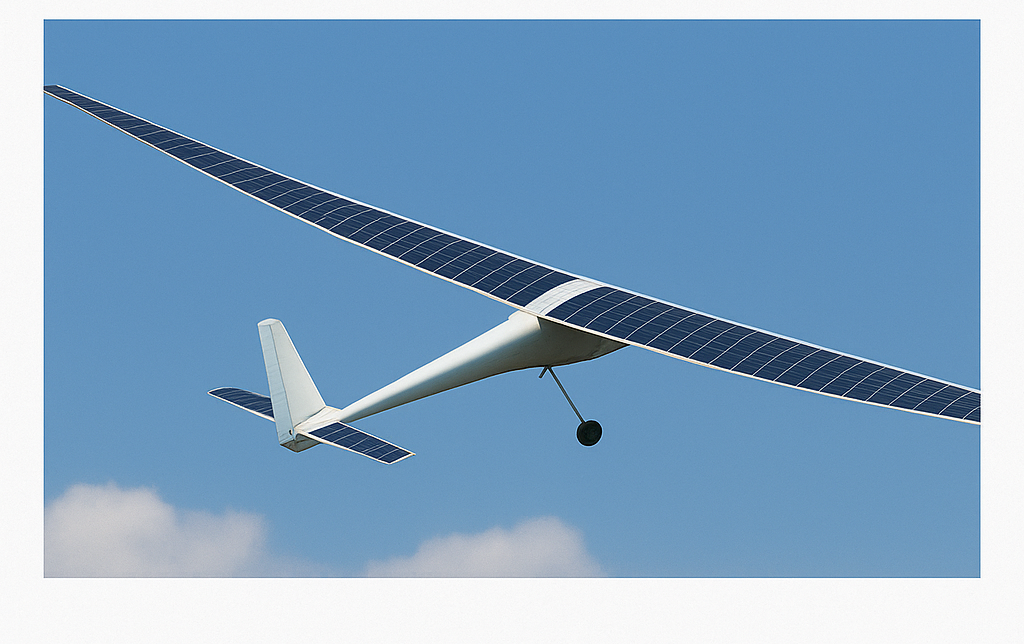
Solar-powered UAVs, from small tactical units to stratospheric High-Altitude Long-Endurance (HALE) systems, are rapidly advancing. Features like lightweight frameworks, high-efficiency solar cells, systems level power management, and densely charged batteries have made flights possible over days and months instead of hours. That makes UAVs solar-powered excellent candidates for persistent ISR (intelligence, surveillance, reconnaissance) operations, communications relay, and maritime domain awareness. This grows the stratosphere’s particular layer between satellites and conventional aircraft. Endurance, along with basic energy constraints, weather, payload, and endurance trade-offs, mean there are high policy, legal, and vulnerability risks. Thus, careful risk to benefit analyses are advocated for. The most recent of these include Airbus’s Zephyr and other new entrants like Skydweller and industry prototypes from XSun.
Recent technological advancements (what’s new)
Stratospheric HALE systems established record-breaking endurance flights, with modern HAPS/HALE platforms able to stay airborne for months on end (previously weeks) thanks to large wing areas, lightweight composite bodies, and high-efficiency solar cells. Through fine-tuned management of energy over the day and night cycles, vehicles have also managed to stay airborne over multiple weeks.
Scaling with large wingspans with integrated solar arrays.
New industry entrants, such as Skydweller, are building large-payload systems with wideholding solar wings and surplus battery packs for month-long operations, maritime surveillance, and wide-area comms relays. These designs combine mechanical strength with duplicates in electronics and systems.
Night operations are lengthened by advances in battery chemistries and specialized power control management systems. Designs and prototypes are also hybrid solar + fuel cell or solar + hydrogen, with even greater operational capabilities in low-sun environments.
New light-weight carbon fiber and integrated solar composite designs allowed for stable and efficient operations in ultra-high altitudes (above weather, and traffic) and greater autonomy onboard with systems performance monitoring and fault tolerant (automation) controls. These designs require less ground control.
Potential military applications (conceptual/ non operational)
The mission scope of solar UAVs is broad and flexible. A few included mission types are:
Continuous maritime, border, or conflict surveillance and remote sensing. Long endurance vehicles with low-altitude operation offer persistent over watch.
Low-latecy, agile comms relay with satellite complement. Integration in cellular or line of sight comms grids.
Surveillance and control automation of wide-area distributed resources at sea.
Environmental and humanitarian support. These platforms can be useful for monitoring disasters, responding to emergencies, and coordinating missions to search and rescue (non-lethal, dual-use benefits).
Some engineering and operational limits (challenges you cannot work around).
Energy density and overnight survival. Solar input is uneven during the day and varies at night. Batteries must store enough energy to support the systems overnight, which creates a trade-off between the weight of the battery and the endurance of the platform which is a limiting factor (trade-off). This is the primary physical limit.
Weather, flying outside the envelop and other operational unacceptable. Clouds, storms, icing, and turbulence, (including strat disruption) can all interrupt power generation or destroy tender, large-span systems which is an operational risk. Prior high altitude prototypes have been destroyed by bad weather.
Endurance versus payload limit. More endurance, as a general rule, requires less payload mass or capability. For defense users, this leads to losing design flexibility between sensors and data over communications capability and time-on-station.
Concealability and survivability. large wing area and long endurance makes these platforms detectable by a range of sensors. Their survivability depends on altitude, signature and tactical concealment, which is a major concern.Integration with airspace and legal boundaries: Ongoing HALE flights cross into the domains of civil aviation legalities, national airspace, and regulatory spectrum; the legal and regulatory guidelines are a work in progress.
Logistics and preserving the life cycle of the platform: Although in many use cases, these platforms are less costly than satellite alternatives, they still incur costs associated with specialized procedures for launch and recovery, ground control, maintenance, spare parts, and expensive total ownership costs that are primarily driven by operational tempo and attrition.
Ethical, legal non-technical, and strategic considerations
“The dual-use and escalation risk” associated with a significantly autonomous operational platform that can conduct persistent surveillance and/or communications relays should provide humanitarian support; but comes with risks of being re-purposed for surveillance and/or targeting systems in warfare. To mitigate escalation risks, some degree of predictive operational transparency in the policies of deployment is warranted.
Sovereignty and overflight risks. Operating under or nearby foreign airspace comes with the risk of diplomatic incidents, hence, established rules of engagement with legal advice are required.
Civil liberties and privacy. Military operations involving wide area ISR (intelligence, surveillance, and reconnaissance) can violate civil liberties in ISR. Policy must stipulate boundaries for acceptable use including data retention and the means to audit the military use of such systems.
Dependency risk: Designing persistent systems for increased operational tempo and systems for persistent surveillance create the risk of single point dependencies. Self-regulating systems should also interoperate diverse systems such as space systems and manned platforms.
Research & Development Goals (Overarching and Strategic)
These goals further advance the degree of capability and potential-function exploitation:
Integration of High-Power Systems: Continuation of research and development of automobiles, batteries and photovoltaic systems which have thinner, lighter, and more fuel-efficient power sources, as well as improved specific power and energy, and safety margins. Thermal management and improved specific energy systems.
Hybrid Systems: Safe exploration of hybrid fuel systems (e.g. fuel cells or hydrogen range extenders) gas systems for periods and regions with low solar insolation.
Robust Autonomy and Fault Tolerance: Development and investment into avionics which have the capacity to detect and respond to atmospheric challenges, optimize energy use, and gracefully extinguish payload functions without user intervention.
Material and Structural Resilience: Survivability of service life is increased with the lighter, damage tolerant, UV opaque, and thermally cycled materials.
Counter-Vulnerability Research: Use of non-lethal hardening, redundancy, and safe operating doctrines to reduce risks targeting jamming, spoofing, or kinetic attack. (High-level policy and defensive hardening rather than operational tactics.)
Primary Considerations for Defenders (Policy and Procurement)
Mission sets must be clearly defined, and should avoid to be commercially procured “persistence for its own sake.” Endurance must determine added value to defined missions (e.g. long range maritime surveillance, communications restoration).
Ensuring modular payload interface systems for use with individual airframes to enable multiple role (sensing, relay, environmental monitoring) use while maintaining the trade-off between payload and endurance.
Providing for range resiliency and operational redundancy by combining solar UAVs with satellites, tactical manned/unmanned aircraft, and distributed sensor networks.
Legal and diplomatic engagement — involve civil aviation authorities and international stakeholders from the start to establish working procedures and minimize the risk of working at cross purposes.
Ethics and oversight — formalize rules for oversight, data usage, and transparency applicable to peacetime and conflict operations.
Future perspectives (5 — 15 years)
Operational constellations and ‘stratospace’ services. A combination of civil and military HAPS is expected to provide affordable regional coverage and continuous monitoring at a fraction of the cost of a satellite.
Interoperability with communications and edge computing. Near-real-time analytics will become possible at persistent observation points with significant reduction in data movement due to on-board processing.
Seasonal reach-extendable hybrid power. Expanding operability outside sunny mid latitudes and extending the seasonal range will be possible with hybrid energy systems and fuel extenuators.
Anticipatory regulatory and doctrinal evolution. New classes and regulations of airspace for stratospheric systems. New rules of doctrine for the deployment of persistent surveillance from aerial platforms in peacetime and during conflict for military purposes.